
Job Hunting in the Age of AI
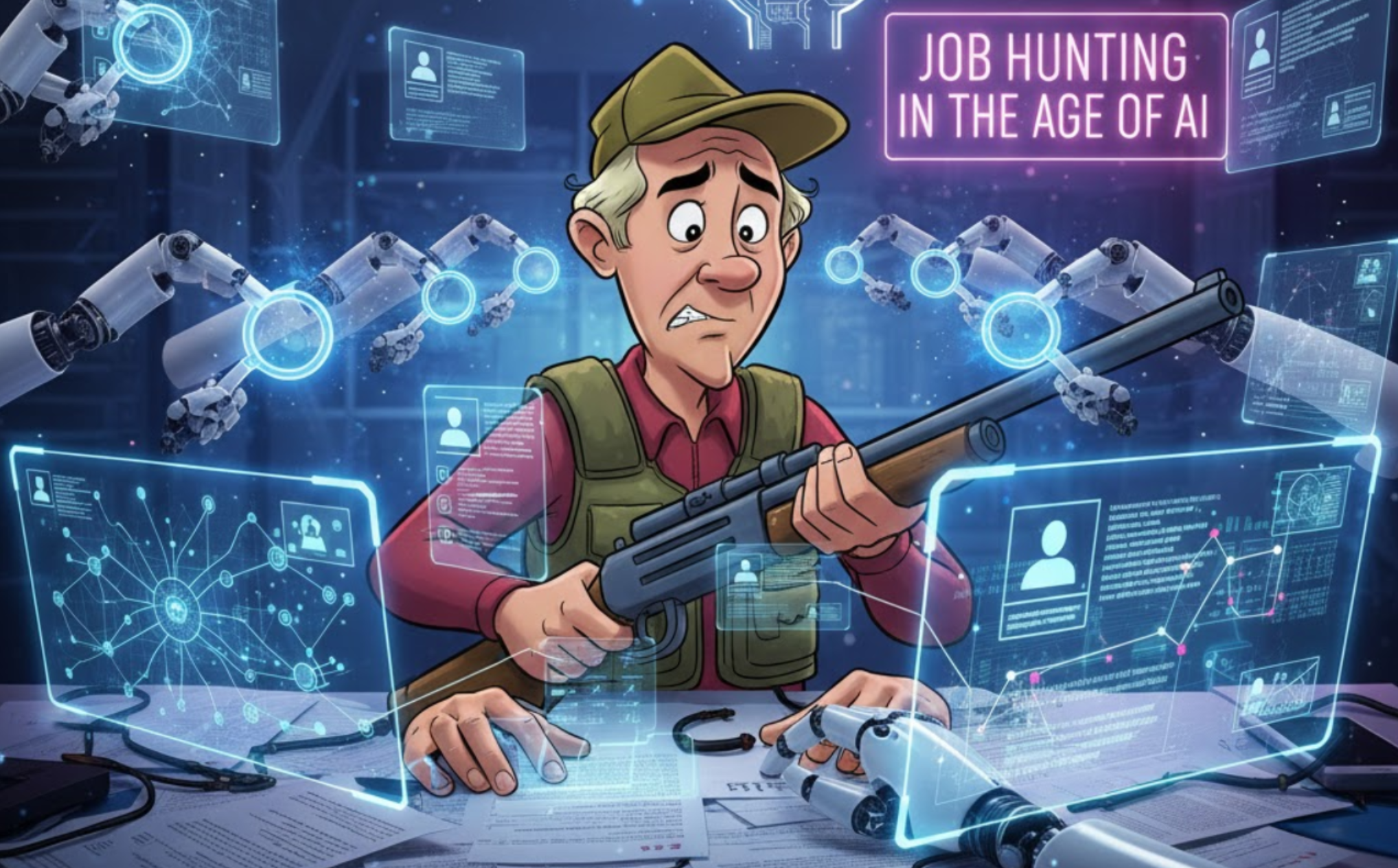
Job hunting sucks. Remote work and AI have only made it worse. Anyone can apply to anything anywhere, and AI tools make it trivial to tailor a resume, cover letter, and spam every job remotely close to someone's background.
I know because just a few months ago I was on the hiring side. Thousands of applicants for a single role, much of it garbage — but challenging to sift through because all the garbage is wrapped up with a nice bow. Some applicants let AI invent experience that perfectly matches the JD. Others let AI stretch reality pretty far, because everyone is desperate for a callback. Like AI generated images: early on it was pretty easy to spot the extra fingers, limbs or just the "look" (like the lead image of this article). But these days it is possible to generate images that are extremely difficult to tell from reality.
The best fake applications are really indistinguishable. I'm pretty sure I interviewed a North Korean impersonating an Eastern European on Zoom, and although it was a strange interview, they came across as knowledgeable and we considered moving them to the next level. A story for another post. One of the best ways to spot the fake stuff was anything that looked too good to be true. But that puts an employer in a pretty weird position - how do you target the right amount of match?
Here's the thing: once a candidate makes it to the interview, I as an engineering manager was much less concerned about a perfect experience match. My priorities were team and culture fit, communication skills, passion for the role, and the knack.
The knack is the ability to grab a technical problem and dig in until it's thoroughly understood. People with the knack will dive into an unfamiliar code base in a language they barely know, and emerge with well-thought-out solutions that are appropriate for the language, framework, and company standards. They might be slower at first than the candidate with perfect on-paper experience. In the long run, they and teams composed of people like them will outperform everyone.
So how does a hiring manager identify this candidate in a sea of polished applications? The best applicant might be one the resume-sifting tools never surface. And on the applicant side — what do we do to stand out?
So, dear recruiters and hiring managers — if you're reading this, maybe you'll agree it makes me a bit different. I promise I'm not from North Korea 😆. How about we schedule a call?